Find the moment jewelry comes off
The missing earring often begins as an ordinary interruption. You take it off before washing your face, set it beside a bottle, and move on to the next thing. By morning, several objects have crossed the same patch of counter. A useful jewelry routine starts with that moment, rather than with a larger box or a perfectly arranged dressing table.
Notice where you actually remove the pieces you wear most days. Choose one deliberate place nearby, away from the sink, countertop edges, and places a child or pet can reach. If your bedside table is already crowded with books and charging cables, clear a small footprint first. A container cannot make an unstable or busy location suitable.
Make the landing spot small on purpose
Think of this as a temporary stop for tonight’s pieces, rather than storage for the whole collection. Lay earrings together so both are visible. Keep chains from collecting in one knot. An existing soft-lined container is enough to test the habit for several evenings before choosing anything new.
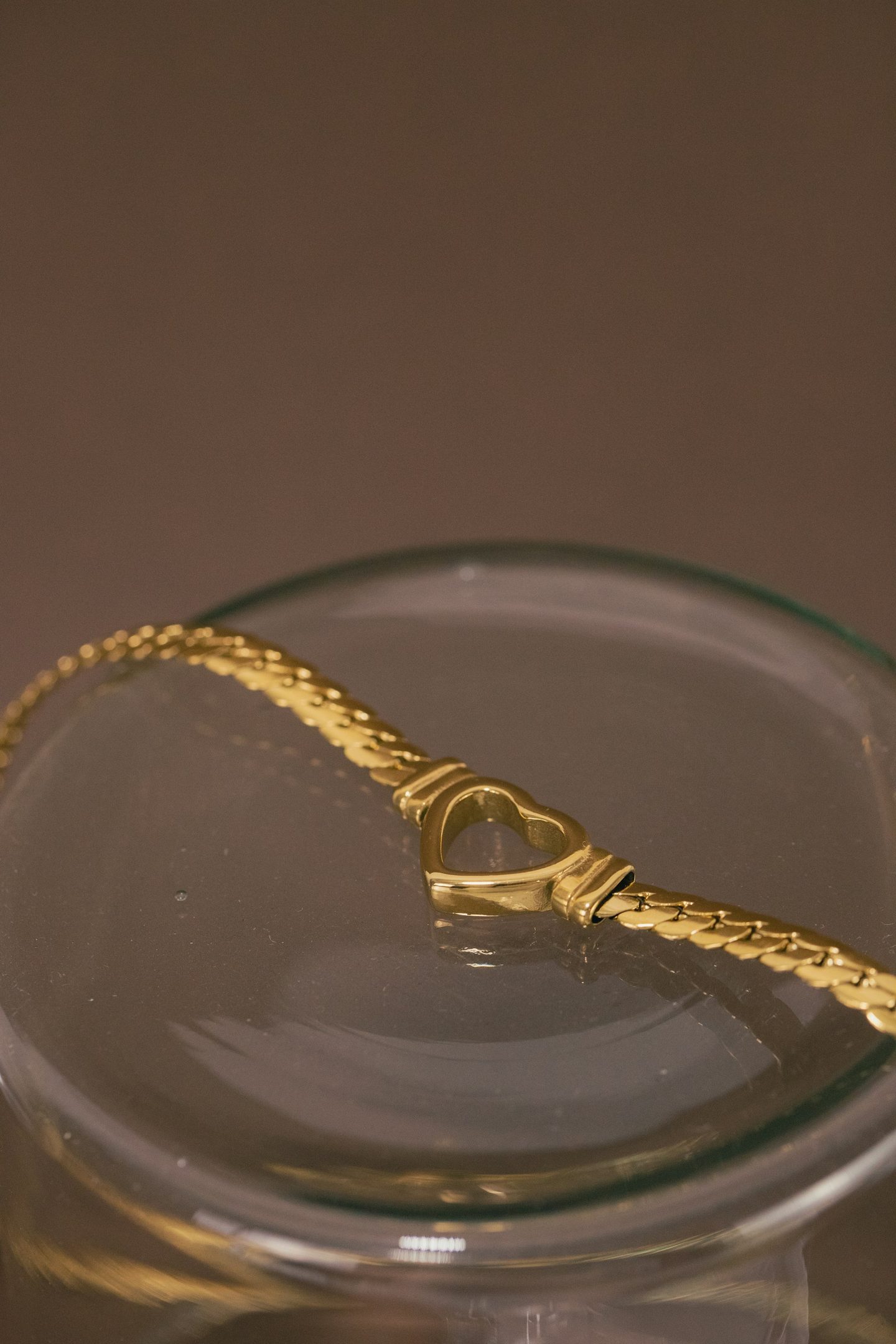
A decorative stone dish can define the spot visually, but a hard surface is not padded jewelry storage. Check the finish and use a suitable soft liner where needed; do not assume a dish will prevent scratches, tarnish, or breakage. Fine, sentimental, and particularly delicate pieces belong in their appropriate cases or pouches instead of an open display. If a clearly defined bedside spot would help you keep the habit, LIN CHUAN Travertine Jewelry Dish (affiliate link) is a decorative option; use a suitable soft liner for jewelry and keep delicate pieces in their proper cases.
Let the material decide the next step
GIA’s jewelry-care guidance explains that cosmetics and household chemicals can harm some jewelry materials. Remove the relevant pieces before washing, applying lotions, or handling cleaners, and follow the care advice for the particular metal, stone, and setting. An organizing routine is not a universal cleaning method; ask a qualified jeweler when you do not know what a piece contains.
Pearls deserve their own plan. GIA recommends a very soft, clean cloth after wear and warns that pearls scratch easily. Keep them separate from rough objects and harder jewelry, using an appropriate soft pouch or case. Do not drop a pearl strand into a dish with rings simply because everything was worn together.
Close the loop in the morning
When getting dressed, either wear the pieces again or return them to their proper storage. Move an item needing repair to a separate, labeled case so a broken clasp does not reappear in the daily rotation. Before changing the arrangement, identify the actual friction: a lid you avoid opening, too little light, or a container placed beyond your natural reach.
After a week, the test is simple: can you find both earrings, and has the landing spot stayed small? If the surface keeps filling, reduce what lives there rather than adding another tray. The aim is an easier transition between wearing and storing jewelry, with fewer opportunities for a small piece to disappear.
Choose one temporary landing spot, separate delicate pieces, and return jewelry to suitable storage before a small tray becomes a pile.
Behind the story
We used these sources to check the guidance. This article is researched; it is not a hands-on product test.


