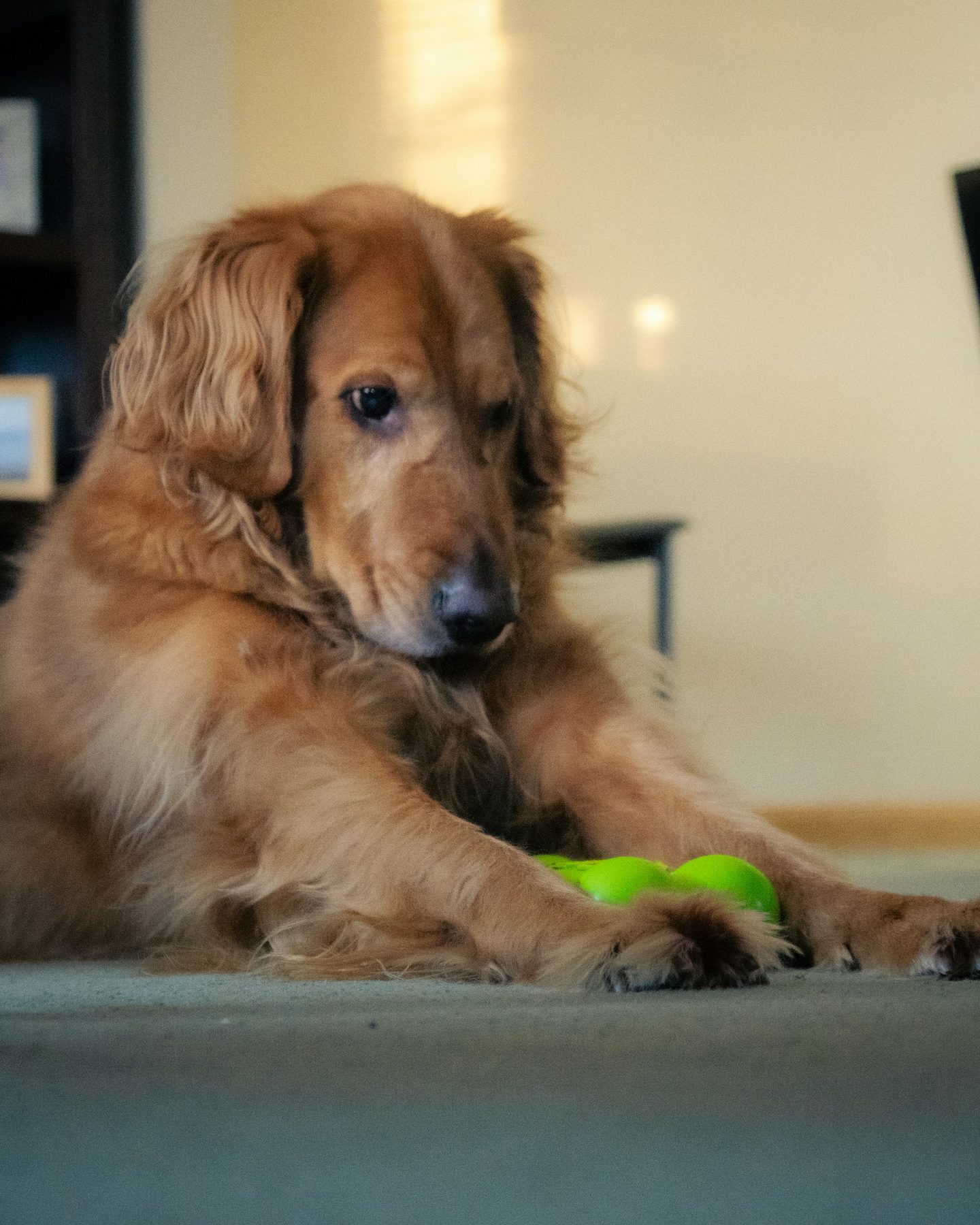
Watch the player before choosing the toy
A toy basket can hold plenty of variety while offering very little that suits the dog in front of it. Some dogs carry soft objects gently; others immediately work on a seam. Before introducing something new, watch a familiar play session. Notice whether your dog prefers chasing, carrying, searching, or pulling, and whether they try to remove or swallow pieces.
Choose a time when you can stay nearby and clear the floor of unrelated small objects. Introducing a toy is an opportunity to observe, rather than a test the dog needs to pass. Their age, mouth size, chewing strength, and individual needs matter more than the photograph on the packaging. Ask your veterinarian for suitable options when dental problems, swallowing behavior, or mobility makes the choice uncertain.
Inspect more than the outside shape
Look along seams, attachment points, and areas your dog grips repeatedly. Check for loose threads, torn fabric, exposed internal materials, or pieces beginning to detach. The American Kennel Club advises inspecting toys and avoiding those that are easily destroyed and swallowed. A label describing an item as durable does not establish how it will perform with your particular dog.
Consider what the toy contains as well as what it lacks. A soft toy without loose stuffing may still contain a squeaker or other internal components. It is not automatically suitable for unsupervised chewing. Choose an appropriate size and design, follow the maker’s directions, and remove it if your dog starts dismantling it rather than playing with it in a suitable way. For a dog that enjoys carrying a soft toy gently, Best Pet Supplies Crinkle Duck Dog Toy, Blue (affiliate link) is an option to assess during supervised play; remove it if fabric or internal parts become exposed or damaged.
Keep the first session uncomplicated
Offer one toy and watch the response without repeatedly taking it away to provoke interest. A gentle toss over a short distance or a chance to carry it may tell you more than a complicated game. Use the product only for the kind of play its instructions allow, and stop if the toy or the activity is becoming unsuitable.
In a home with several dogs, introduce an unfamiliar toy separately if competition is likely. Guarding, stiff body language, or conflict calls for appropriate professional guidance, not a contest over who can retrieve the toy. A play session can be brief and still give you useful information about which textures and activities your dog chooses. You do not need to keep escalating the excitement.
Make the basket a working collection
After play, inspect the item again, clean it according to its instructions, and let it dry appropriately before storage. Humane World for Animals recommends discarding toys that are breaking into pieces. Avoid trying to extend the life of an unsuitable toy with improvised repairs your dog could pull off and swallow. Keep damaged items out of the rotation immediately.
Leave a small selection of suitable toys available according to their supervision requirements and store the rest separately. A short note about what your dog enjoyed can guide the next choice better than another large mixed pack. The goal is a collection you understand well enough to use and maintain, with the dog’s actual behavior setting the pace of play.
Inspect the toy, supervise how your dog uses it, and retire damaged items instead of relying on a durability label.
Behind the story
We used these sources to check the guidance. This article is researched; it is not a hands-on product test.


