Check the material before choosing the method
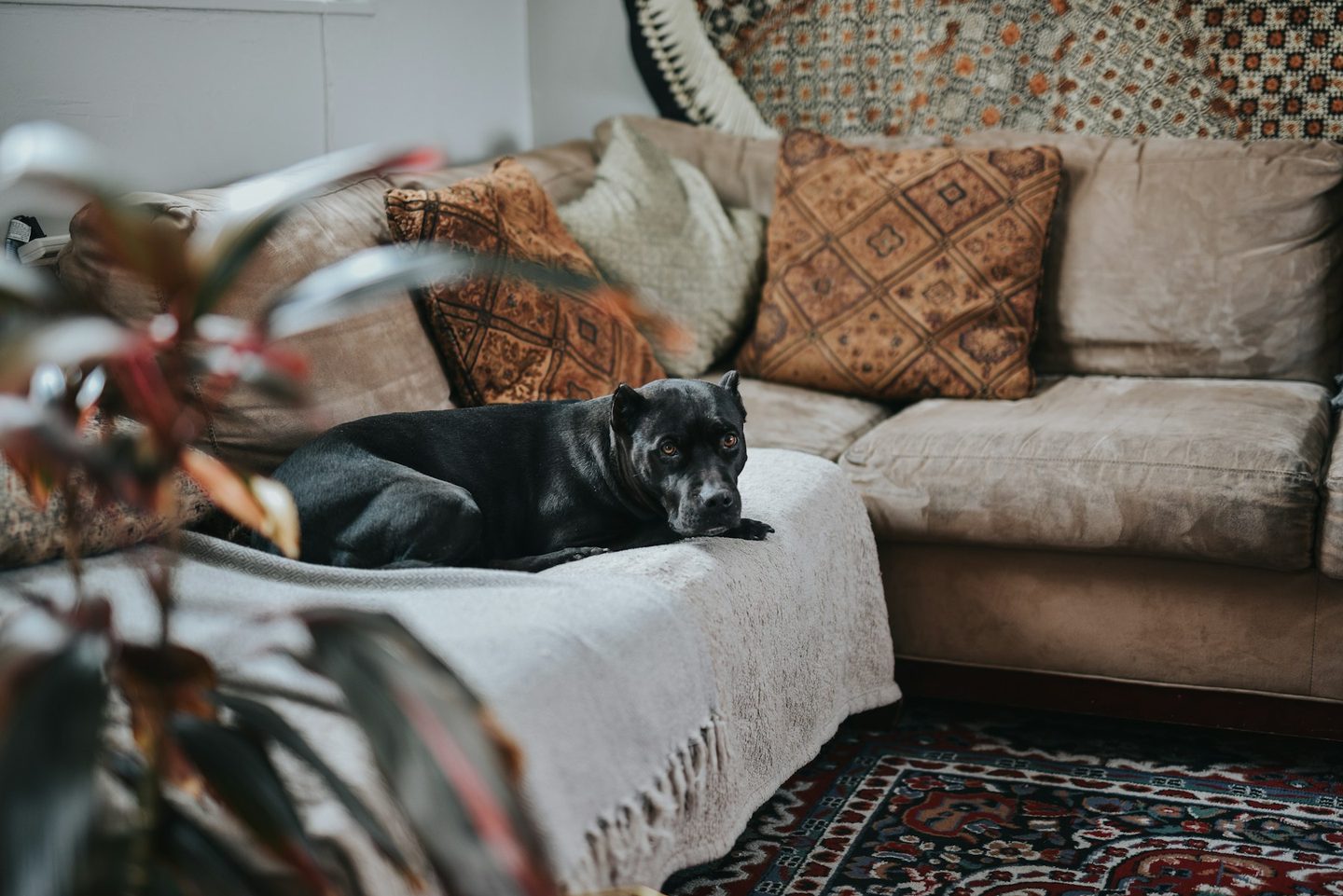
The sofa can be a favorite place for both a pet's afternoon nap and a person's evening reading. A useful reset does not need to make the whole room look untouched. It needs a sensible way to remove loose hair from the seating area without being hard on the fabric. Begin with the care label and the furniture maker's instructions, even if a cleaning tool looks straightforward.
La-Z-Boy's upholstery guidance emphasizes identifying the fabric and its cleaning code before cleaning. A removable cushion cover is not automatically washable, and a method suited to one sofa may be wrong for another. If the label is missing or the upholstery is unusually delicate, ask the furniture maker before experimenting. Keep spills and stains as separate jobs rather than adding liquid cleaner to a hair-removal routine.
Clear the loose material, then work on one seat
Move throws and small cushions aside, checking their own care instructions before deciding what to wash. Remove crumbs and loose debris with the vacuum attachment and settings appropriate to the sofa. La-Z-Boy recommends regular vacuuming or light brushing for general upholstery care. Do not force a vacuum nozzle across trims, fringe, or a loose thread; deal with those areas according to the furniture's guidance.
For remaining hair on suitable fabric, follow the chosen tool's instructions and try an inconspicuous patch first. ChomChom's roller directions describe short back-and-forth strokes across fabric and emptying the collection compartment afterward. That is a fabric-cleaning method, not permission to use the roller as a grooming brush on an animal or to scrub every material in the room. Stop if the surface catches, pulls, or changes appearance. For the fabric-only hair-removal step, ChomChom Roller Pet Hair Remover (affiliate link) is a reusable option. Check your upholstery's care guidance and try a hidden patch before working across the seat.
Set an endpoint you can repeat
Choose a manageable area: the seat you plan to use and the adjacent arm, for example. Work through it in small sections so you know what has been covered. Check the tool's collection area as its instructions require, then empty it over a bin. Keep the tools and collected debris away from pets while you work.
Once the area is ready for use, replace the cushions and put the equipment away. There is no need to keep working until every stray hair has disappeared from every angle. If one throw regularly collects most of the hair, making its care instructions easy to find may be more helpful than adding several new cleaning gadgets.
Make the next reset easier to begin
Keep the appropriate attachment and any compatible hair-removal tool together in a nearby cupboard. Leave a quick note with the sofa's fabric code and care page so the next person does not need to rediscover them. If several people share the room, agree on where the tools belong and what the normal reset includes.
After a few rounds, assess the awkward part. It may be reaching a seam, moving too many decorative cushions, or remembering how a throw should be cleaned. Solve that specific friction. The aim is an ordinary shared seat that is easy to prepare again, while treating both the furniture and the pet as part of everyday home life.
Check the sofa's care instructions, clear loose debris, and test a suitable hair-removal tool before working across the seating area.
Behind the story
We used these sources to check the guidance. This article is researched; it is not a hands-on product test.


