Give the task a purpose
An untidy-looking shrub can make a quick trim seem like the obvious next job. Pause long enough to decide what you want to change. Is a small shoot obstructing a path? Are two branches rubbing? Or are you mainly reacting to a plant that has a naturally loose shape? Naming the problem gives you a way to judge the work and a reason to stop.
Take a photograph from a few steps away before reaching for a tool. Look at the whole plant rather than only the longest stem. For a beginner, a clearly defined task on a small, accessible plant is easier to plan than an open-ended promise to cut everything back. If you cannot explain why a branch should go, leave it while you learn more.
Check the plant and the timing together
Identify the plant as accurately as possible, including its variety when that affects care. Then consult guidance for that plant and your region. University of Minnesota Extension explains that pruning timing varies: plants flowering on the previous season's growth are treated differently from shrubs flowering on new growth. A general seasonal checklist is therefore a starting point for research, not a universal cutting schedule.
If flowers matter to you, find out where their buds form before shortening the stems. Note any local disease-related timing restrictions too. The same Extension guidance gives species-specific exceptions to general pruning advice. Save the relevant instructions with the plant's name so the next decision does not begin with another guess.
Match a maintained tool to the actual stem
Inspect the tool before taking it into the garden. Check its blade condition, movement, lock, and manufacturer's care instructions. Extension recommends sharp, well-maintained tools and distinguishes hand pruners from tools intended for larger branches. Match the actual stem to the stated capacity of the specific tool; do not assume every pair of pruning shears handles the same diameter.
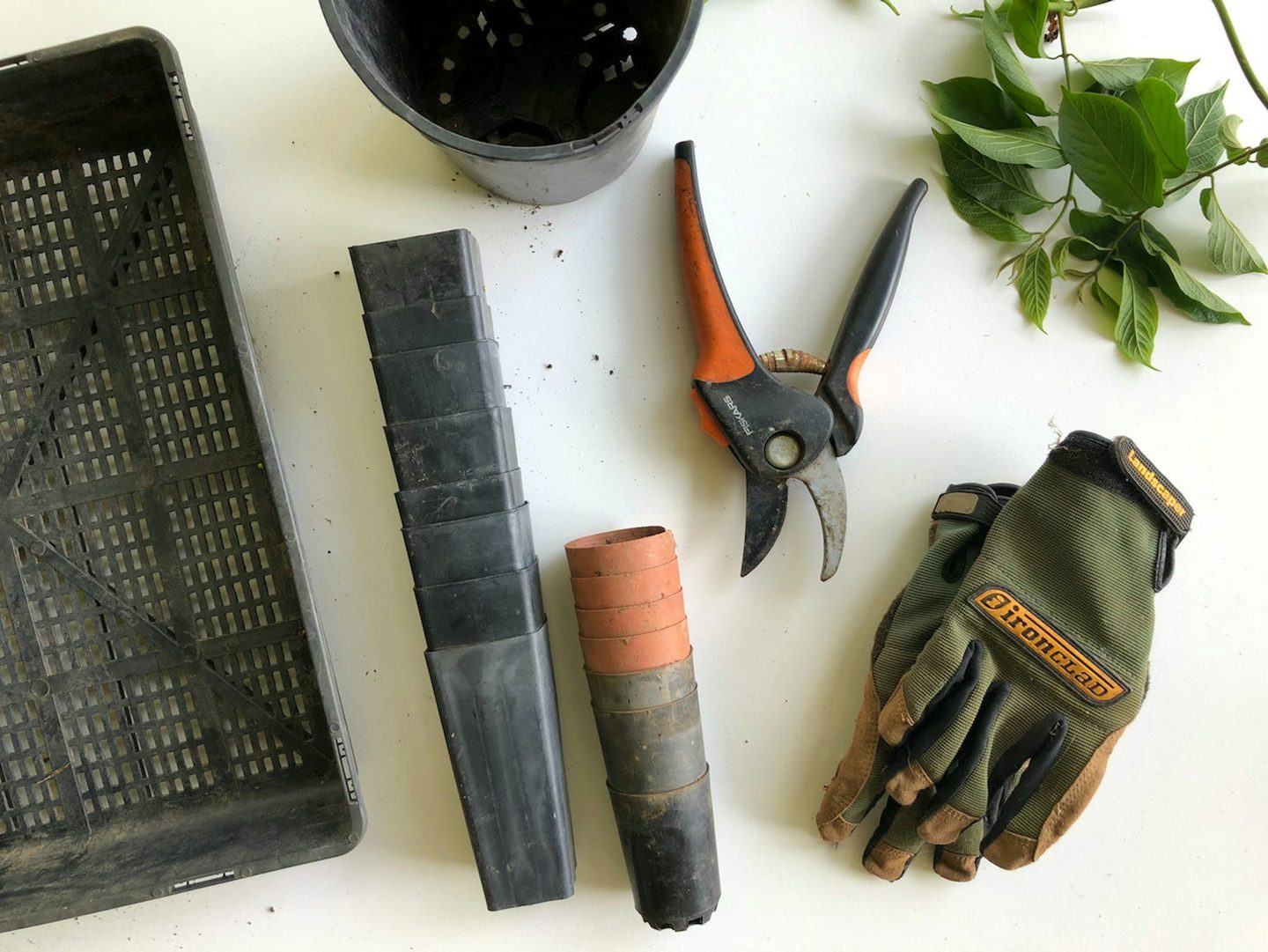
If a cut requires excessive force, stop and reassess the tool and the task. Keep the job within comfortable reach from stable ground. Pruning around utility wires and work on large trees belong with the appropriate utility or qualified tree-care professional, rather than becoming an improvised extension of a small hand-pruning session. For a small live stem, a bypass-pruner option such as Fiskars Bypass Pruning Shears (affiliate link) can fit the hand-tool part of the plan. Check its stated cutting capacity and grip before matching it to the job.
Include cleanup in the plan
Follow plant-specific instructions for the position and type of cut. Step back between small changes and compare the result with the purpose you chose. Avoid escalating a minor tidy into major reshaping simply because the tools are already out. A question about the plant's identity, health, or response is a useful reason to pause and ask a local Extension service.
Before storing the tool, remove visible soil and plant debris and follow its care instructions. Minnesota Extension distinguishes cleaning from disinfection and highlights disinfection after working with infected plants before moving to another. Use a suitable product according to its label and the tool maker's guidance; never mix disinfectants. Finish by saving your plant notes and photograph, giving the next pruning session a more informed starting point.
Identify the plant and its pruning requirements, name the reason for each cut, and check tool condition before beginning.
Behind the story
We used these sources to check the guidance. This article is researched; it is not a hands-on product test.


