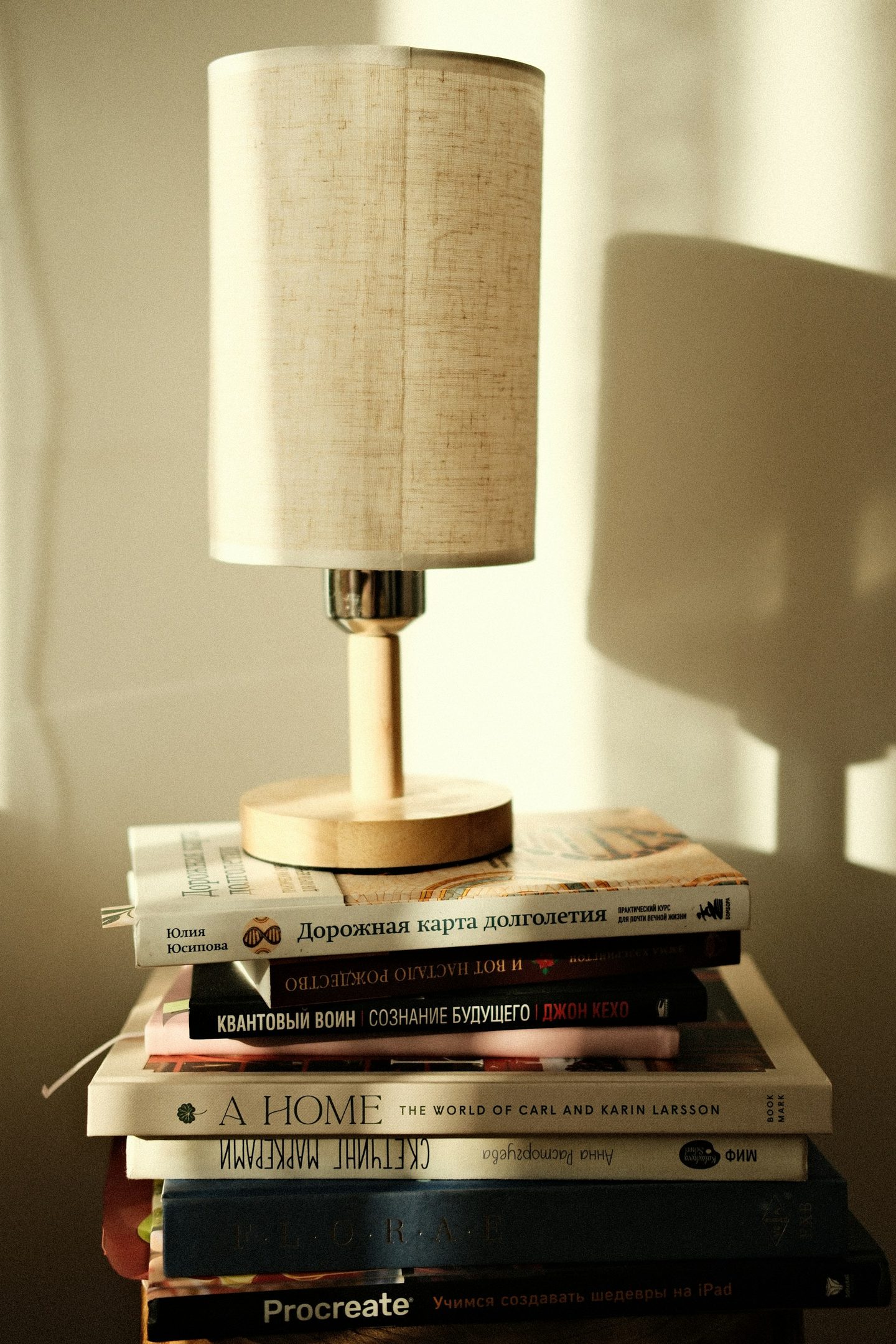
Test the corner as you use it
A reading corner can look complete in daylight and feel unfinished when you open a book at night. Before changing the chair or buying an entire lighting scheme, sit down with the material you usually read. Hold it at its normal angle and turn on the lights you actually use in the evening. Notice where the page is clear, where it falls into shadow, and where a bright reflection interrupts it.
Test a paperback, a glossy magazine, or an e-reader if those are part of the routine. They do not interact with the same light in exactly the same way. A useful setup begins with this particular seat and these reading habits, rather than the appearance of an empty chair in a product photograph.
Put useful light on the task
The U.S. Department of Energy's task-lighting guidance recommends focusing light where the work happens rather than relying only on brightly lighting an entire room. For a reading corner, that means evaluating what reaches the page. Try a different lamp position before assuming you need a more powerful bulb. A small change in direction may alter the shadow cast by your head or the book itself.
The Canadian Centre for Occupational Health and Safety's lighting checklist calls for enough light for the task, without troublesome reflections or glare near the normal line of sight. Its workplace guidance provides useful questions for this home experiment. Keep some surrounding room light available and assess the result from your seat, not while standing beside the lamp.
Measure the whole lamp, including the arc
A floor lamp needs more space than the circle its base occupies. Check where the shade will hang, whether the chair can move, and whether someone standing up could meet the lamp's arc. Brightech describes the Olivia as an arc lamp that reaches over seating from a base to the side. That shape can suit a particular layout, but it needs a different footprint check from a compact upright lamp.
Mark a proposed base position with removable tape and compare the manufacturer's full dimensions with the available space. Keep the base and cord out of the normal walking route. Check that the switch is reachable in ordinary use and follow the manufacturer's assembly and bulb instructions. A lamp that looks right but makes the corner awkward to enter has not finished the job. An arc floor lamp such as Brightech Olivia Floor Lamp, Chrome (affiliate link) can bring a shade over the chair from a base to the side. Confirm the full reach and base footprint against your reading corner before choosing it.
Change one thing, then check again
If the page has a shiny patch, try changing the lamp or page angle. If the book is in your own shadow, try lighting it from another position. CCOHS identifies both direct light and reflected light as possible sources of glare. Treat those as separate observations instead of responding to every problem by adding brightness.
Use the arrangement for a few ordinary reading sessions before adding accessories. Note whether the chair, page, and switch stay in comfortable reach and whether the light works for another person using the seat. Keep the solution as small as the problem allows. A good reading corner leaves you with fewer practical reasons to move somewhere else when you finally have time for a chapter.
Try the light from your normal reading position, check for reflections and shadows, and measure a floor lamp's full reach as well as its base.
Behind the story
We used these sources to check the guidance. This article is researched; it is not a hands-on product test.


