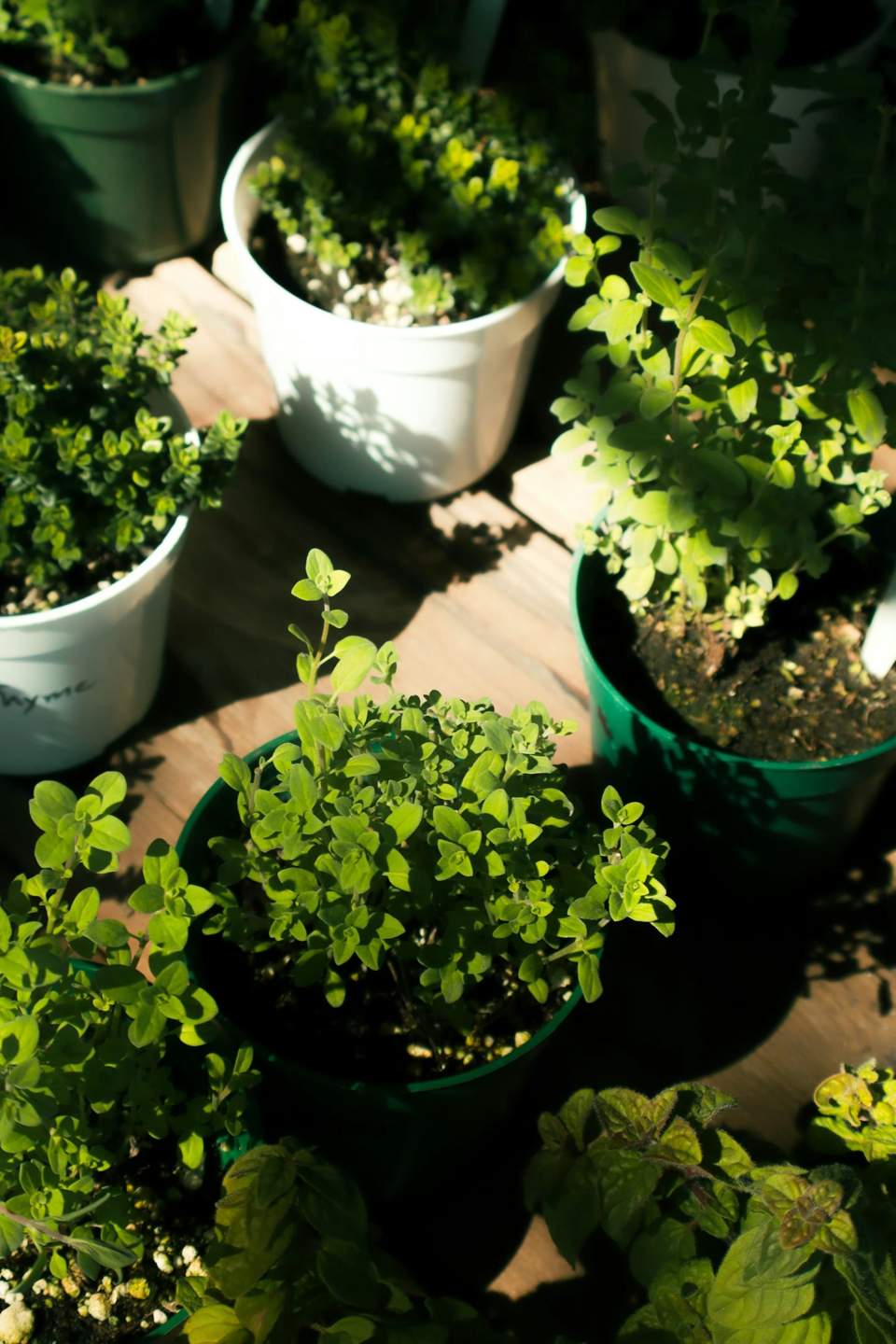
Start with dinner, not the garden-center display
A small herb garden has an appealingly clear purpose: a few leaves for the food you already make. Begin by looking at your meals. If you regularly cook with parsley, chives, or thyme, those deserve consideration before a plant that simply looks attractive on the shelf. Choose two or three herbs you can picture using, then check whether your actual growing space suits each one.
Keep the first version deliberately small. Separate pots let you move a plant, change its position, or give it different care without reorganizing the whole garden. They also make it easier to notice what you have learned. The goal for this first round is a manageable growing routine, rather than a photograph of a fully stocked balcony.
Check the light before choosing the location
Watch the proposed spot at different times of day. A bright-looking corner is not necessarily receiving much direct sun. University of New Hampshire Extension recommends a sunny site for container herbs and notes that their individual requirements matter. Read the plant label, check local growing guidance, and choose herbs for the conditions you have rather than hoping an unsuitable location will work.
Indoor growing needs the same thought. University of Maryland Extension explains that indoor herbs can be more challenging and may need supplemental lighting. An attractive windowsill is a starting point for evaluation, not a guarantee. If the light is poor, change the location or begin with a different project before buying a whole set of plants and accessories.
Choose pots for the roots and the space
Select containers with drainage holes, suitable room for the chosen plant, and enough stability for their location. New Hampshire Extension warns that very small pots can dry out quickly, while overly large pots may stay wet too long. Maryland Extension recommends well-draining commercial potting media for container herbs. Use the plant's needs to choose a container rather than treating every decorative pot as interchangeable. A Bloem Terra 8-Inch Planter (affiliate link) is one example with drainage holes, provided its size suits the herb you chose.
Before planting, decide where drained water will go. Protect an indoor surface and avoid creating a wet walkway outside. On a balcony, check building rules and suitable placement before adding heavy containers. A saucer can protect a surface, but it should not become an excuse to leave a plant standing in collected water.
Keep a care note instead of guessing
Write the herb name and its care instructions on a label or in one phone note. Check the potting mix and the plant before watering, using the guidance for that particular herb. Rosemary's preferences, for example, are not identical to those of every other herb. Separate pots help you respond to those differences instead of watering an entire collection by one rigid calendar.
For the first few weeks, record where each pot sits and any change you make. Harvest according to guidance for the herb, and use a little in a meal when it is ready. Expand only when you can explain what the next plant needs and where it will live. Three well-chosen pots give you enough to practice without turning a pleasant project into another crowded shelf.
Choose a few herbs you cook with, check their light requirements, and start in separate pots with drainage.
Behind the story
We used these sources to check the guidance. This article is researched; it is not a hands-on product test.


