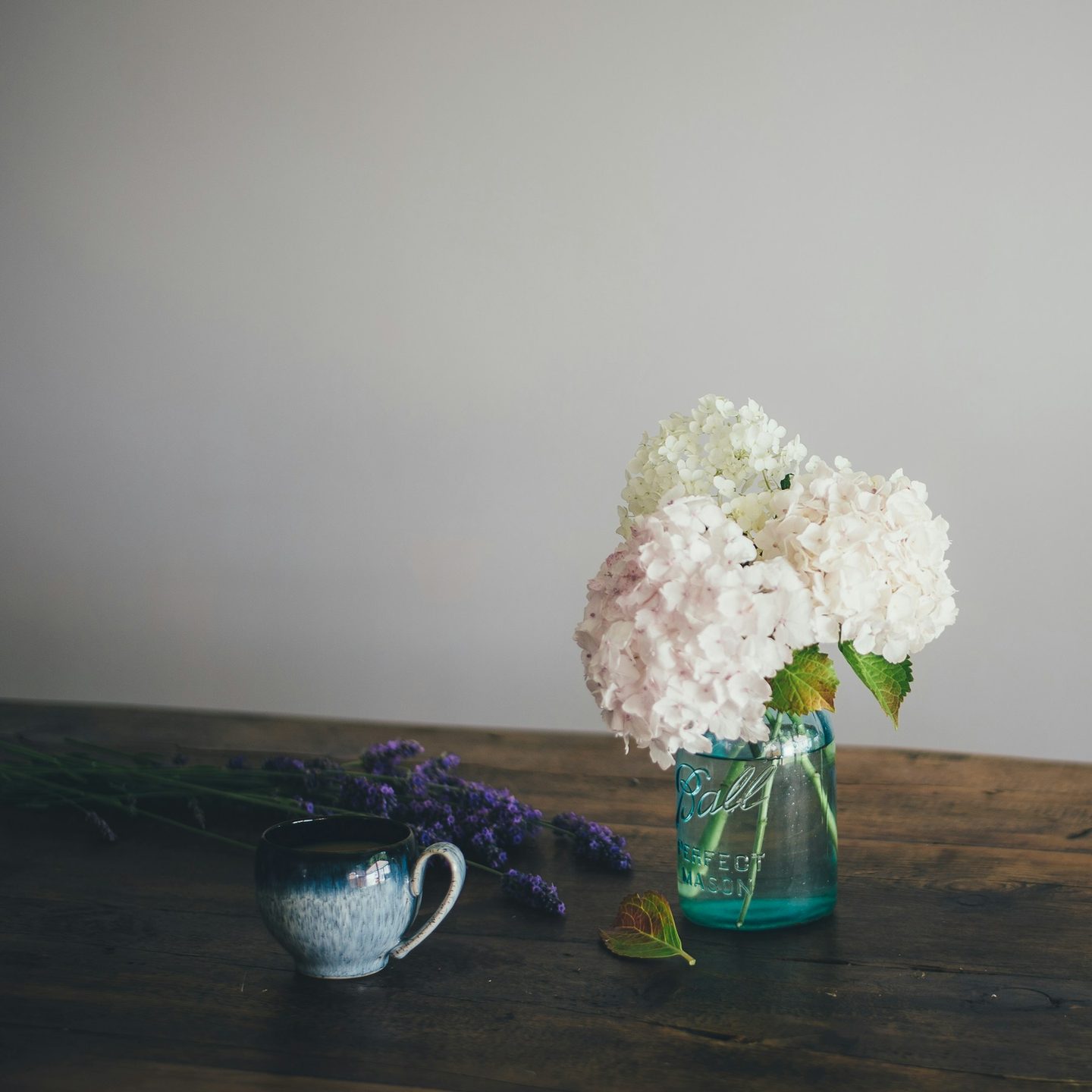
Choose the view before the flowers
A bunch can look generous in its wrapper and strangely lost once it reaches the table. Before adding more flowers, decide where this arrangement will live. A dining table needs room for plates and conversation. A hallway shelf might allow more height, but the arrangement should not brush coats or block the route. Put an empty container in the proposed spot and walk past it before committing.
Think about the direction people will see it from. A display against a wall can have a front; something in the middle of a table needs attention from several sides. Remove unrelated objects from the immediate area. Sometimes the flowers need a quieter background, rather than another handful of stems.
Match the opening to what you have
Lay the bunch beside the container and notice the relationship between its opening and the stems. A broad opening can make a small bunch spread thinly. Try a narrower vessel you already own before buying more flowers. Iowa State University Extension explains that scale, balance, and the open space between materials all contribute to an arrangement.
A decorative vase still needs to suit its job. Check whether the maker permits water and fresh flowers, how it should be cleaned, and whether its base sits steadily. If the vessel is intended only for decorative or dried stems, choose an appropriate water-holding container instead. Place it on a suitable surface, away from an edge or a frequently opened cupboard. If the arrangement needs a more sculptural container, Ceramic Silver Crinkle-Shape Vase (affiliate link) is one decorative option; check its dimensions and whether it is suitable for water before choosing fresh stems.
Build a shape, then stop and look
Choose one bloom or small group to lead the arrangement. Add the other stems gradually, turning the container as you work and leaving some breathing room. Varying heights slightly can help individual flowers remain visible. This is an experiment, not a rule that every stem needs a different length; hold a stem beside the vase before making an irreversible cut.
Pause after placing a few stems. Step back to the distance from which the arrangement will usually be seen. If one side feels crowded, move a stem before introducing another. A quick photograph can make overlaps more obvious, but the room itself is the final reference. You are arranging something to live with, rather than filling every opening for a close-up picture.
Keep the arrangement easy to maintain
Iowa State’s cut-flower care guidance recommends a clean vase, keeping foliage below the waterline removed, and using commercial floral preservative according to its directions. Check the water daily and replace it if it becomes cloudy or develops an odor. Keep fresh flowers away from heat sources and drafts. Different flowers fade at different rates, so watch the actual stems instead of expecting a fixed number of days.
As individual flowers fade, remove them and reconsider the arrangement that remains. A shorter container may make the surviving stems useful again. Keep a note of which vessel worked with this particular bunch. That small observation can make the next supermarket bouquet easier to arrange without turning a pleasant household detail into another large collection of supplies.
Start with the view, use a suitable clean container, and adjust a few stems before deciding the arrangement needs more flowers.
Behind the story
We used these sources to check the guidance. This article is researched; it is not a hands-on product test.


